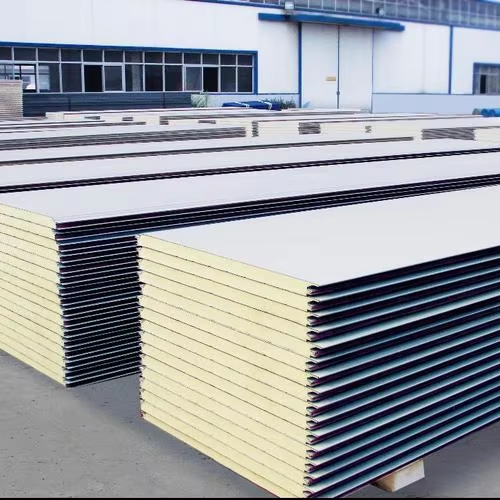
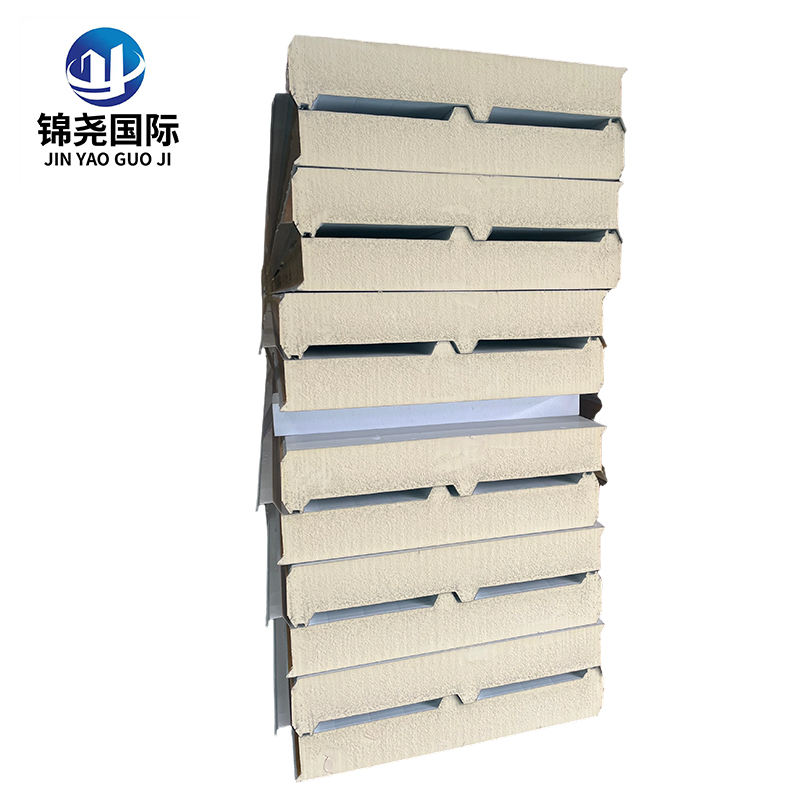
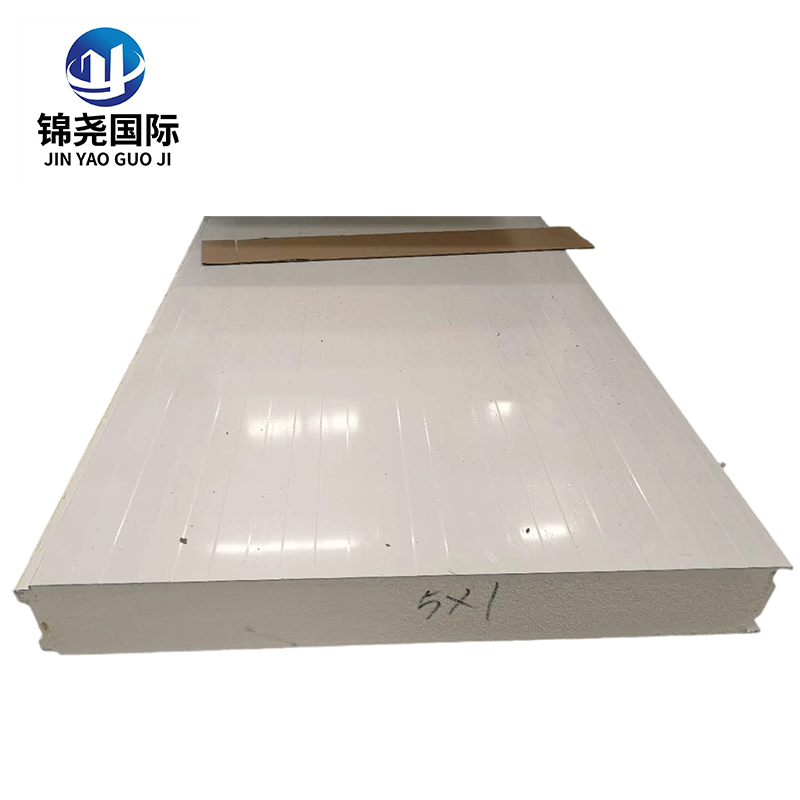
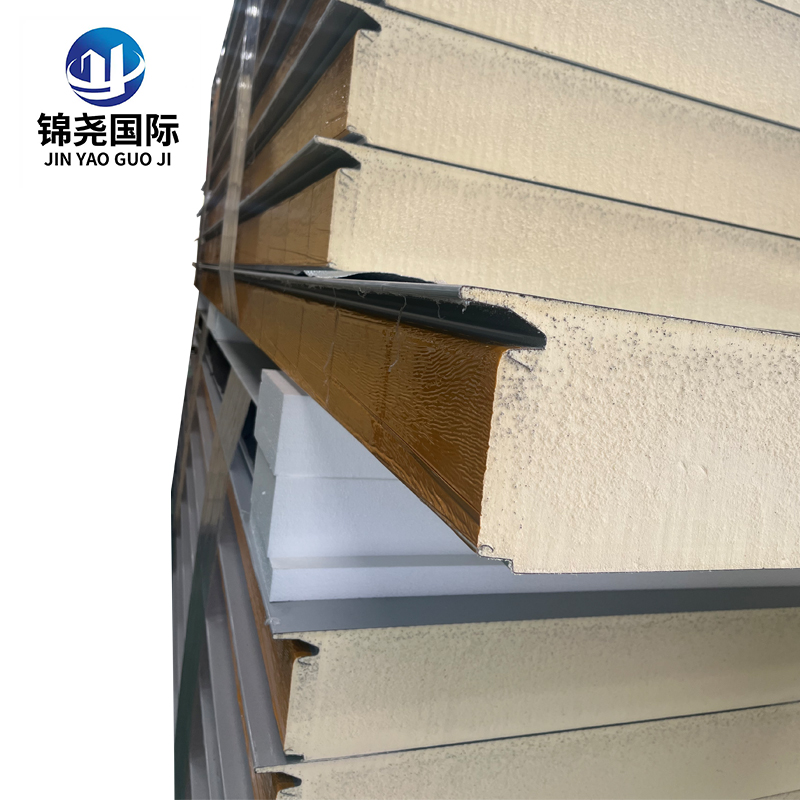
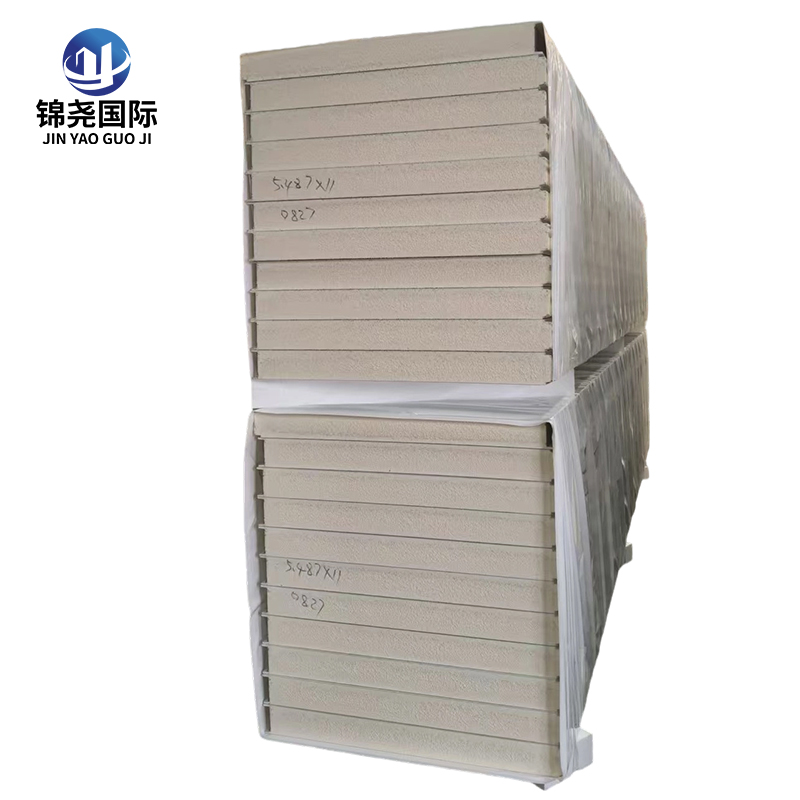
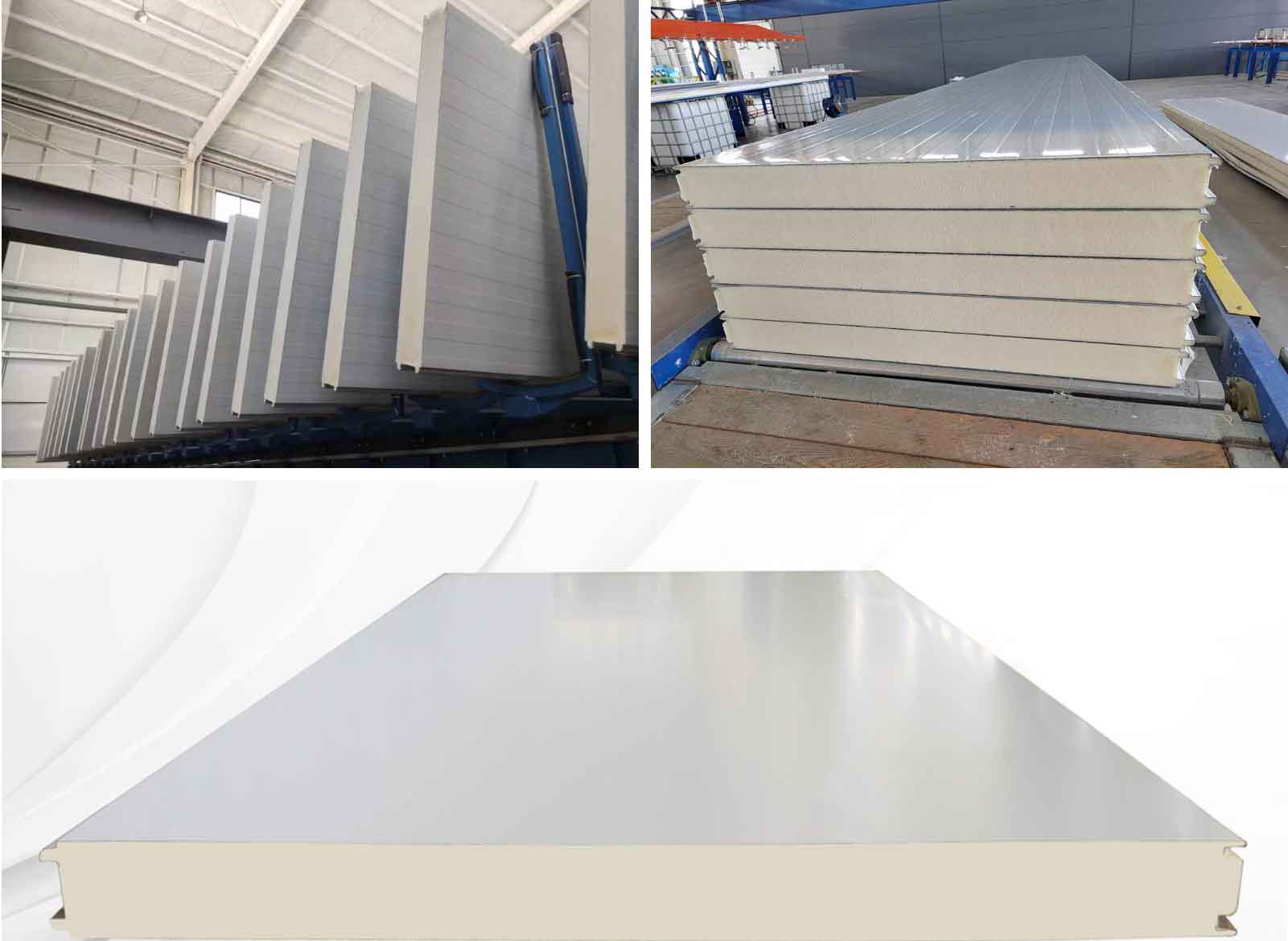
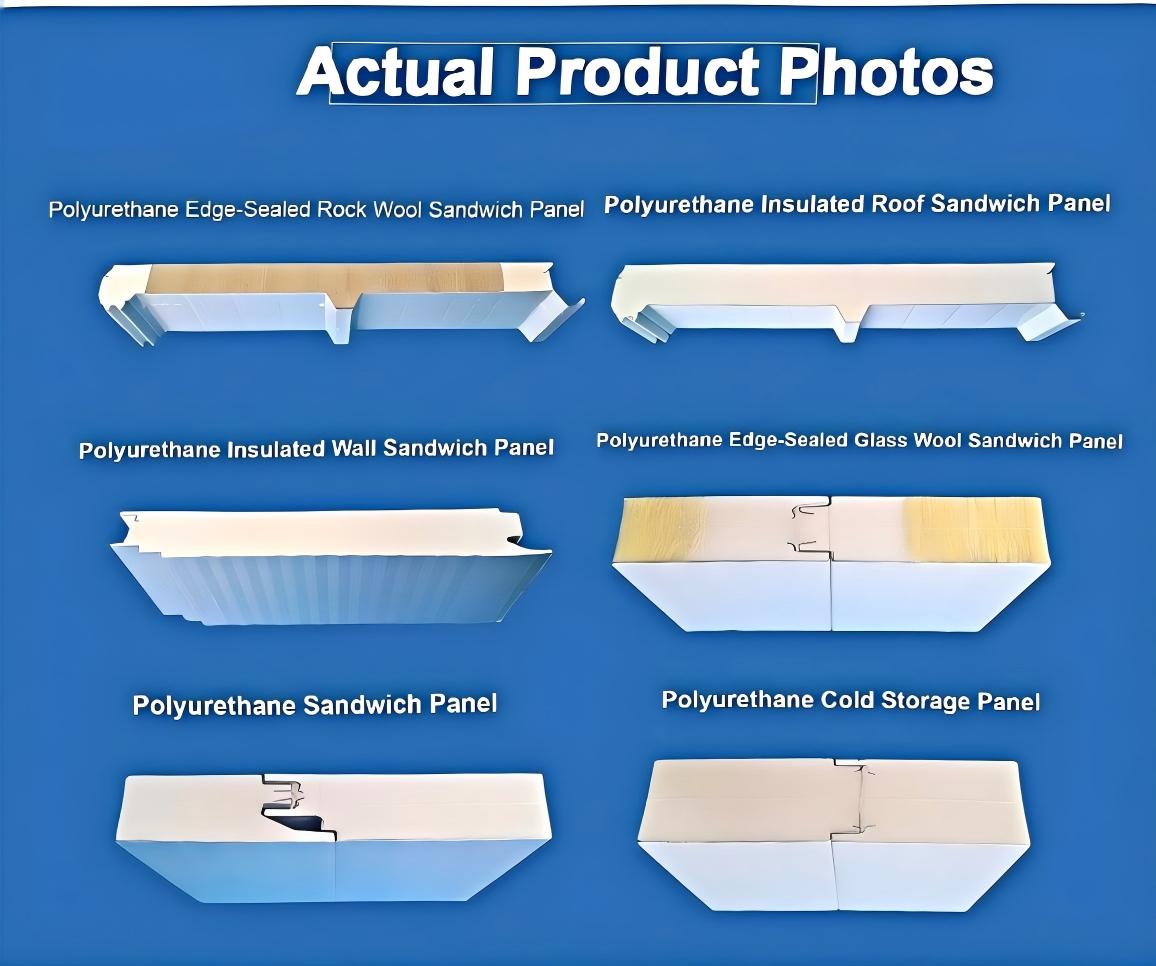
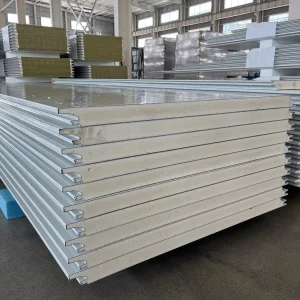
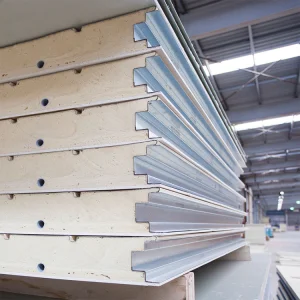
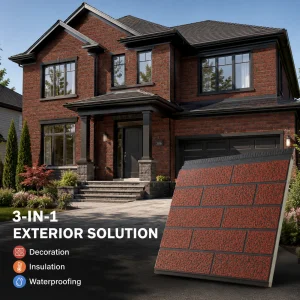
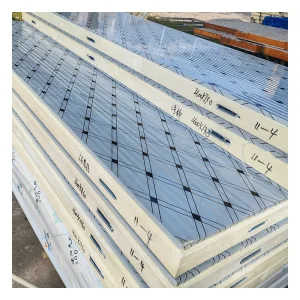
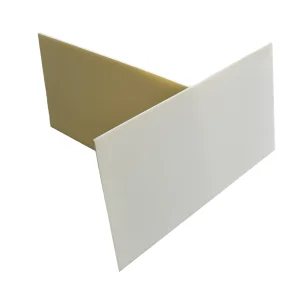
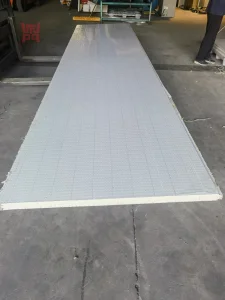
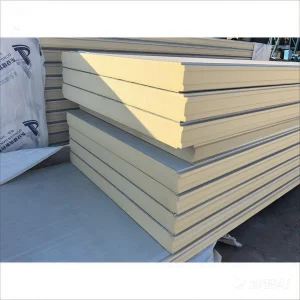
PU sandwich panels, short for Polyurethane Sandwich Panels, are high-performance building materials widely used in modern construction for walls, roofs, and partitions. They integrate structural strength, thermal insulation, and aesthetic appeal, making them a preferred choice for both industrial and commercial projects.
1. Core Structure
A standard PU sandwich panel consists of three key layers, designed to balance functionality and durability:
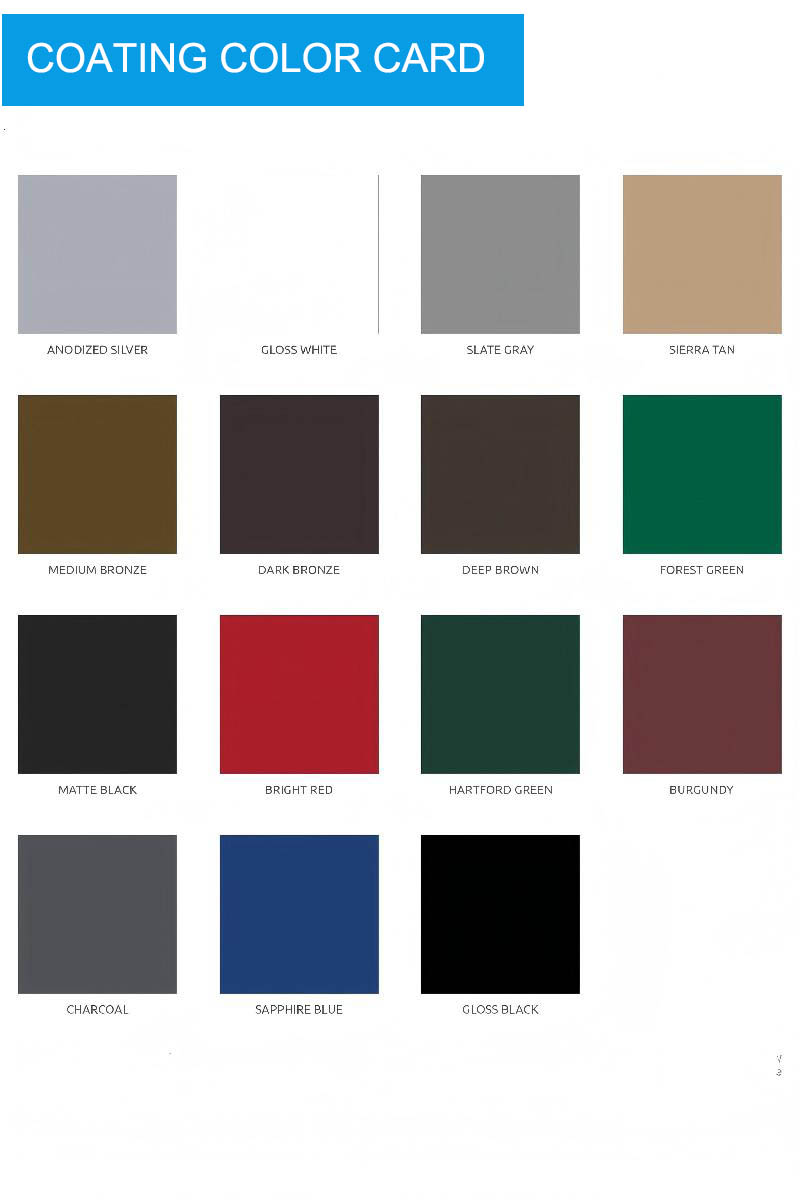
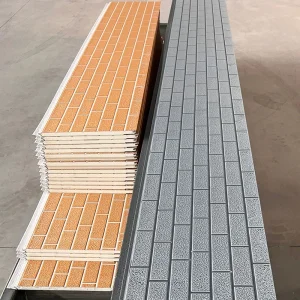
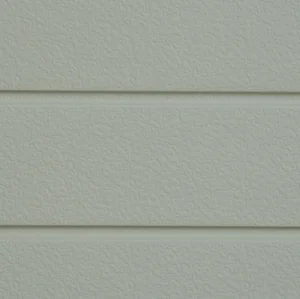
Outer & Inner Facings: Typically made of high-quality metal sheets (e.g., galvanized steel, color-coated steel, or aluminum). These facings undergo surface treatments (such as anti-corrosion coating or PVDF painting) to resist weathering, rust, and scratches. Custom options like perforated sheets or textured finishes are also available for design flexibility.
Core Material: Rigid polyurethane (PU) foam, injected and bonded between the two facings under high pressure. The PU foam features a closed-cell structure, which is critical to its thermal and waterproof performance.
2. Key Properties
PU sandwich panels stand out for their comprehensive performance advantages, addressing multiple construction needs:
Exceptional Thermal Insulation: With a low thermal conductivity (as low as 0.022 W/(m·K)), PU foam effectively blocks heat transfer. This reduces energy consumption for heating and cooling, making buildings more energy-efficient—ideal for projects aiming for green building certifications.
Light Weight & High Strength: Despite their light weight (typically 10–15 kg/m²), the panels offer strong load-bearing capacity. The metal facings enhance structural rigidity, allowing them to withstand wind, snow, and minor impacts without deformation.
Superior Waterproofing: The closed-cell structure of PU foam prevents water absorption, while the seamless bonding between facings and core eliminates water leakage risks. This makes the panels suitable for roof applications and humid environments (e.g., swimming pools, bathrooms).
Excellent Sound Insulation: The dense PU core absorbs sound waves, reducing noise transmission between spaces. This is particularly valuable for hotels, hospitals, and residential buildings.
Fire Resistance (Optional): Flame-retardant PU foam can be used to meet fire safety standards (e.g., B1 or B2 classification). For high-risk areas (e.g., industrial kitchens), panels with fireproof cores (e.g., rock wool combined with PU) are available.
Specification
Parameter
Details
Product Name
PU/PIR Sandwich Roof Panel
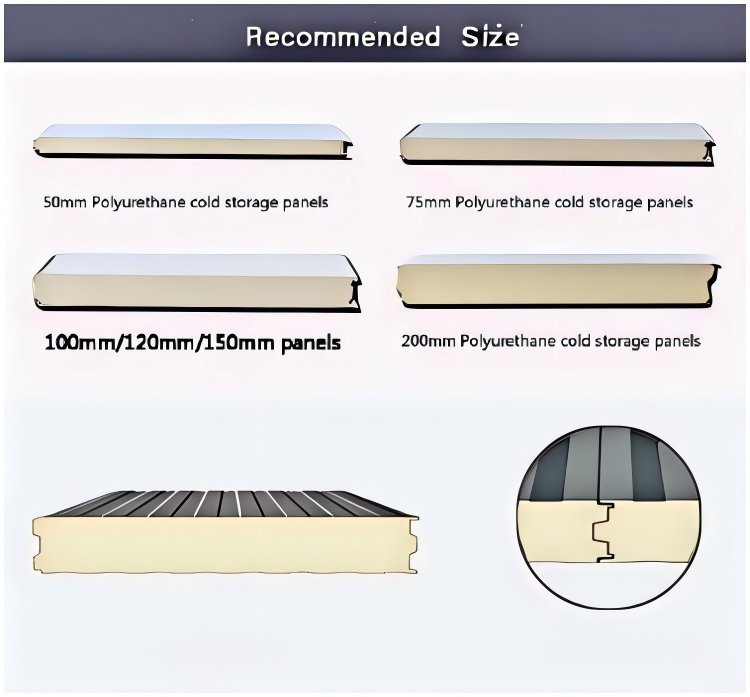
Thickness of panels
30/50/75/80/100/120/150mm
Core material
PU/PIR
Thermal conductivity of PU/PIR
≤0.0195w/(m. k)
Density of core material
40-45 KG/M3
Height of major rib
40mm
Thickness of Exterior/ interior face
0.3-0.8 mm
Effective width
1000 mm
Length of panel
Max.11.8 meters
Color of steel plate
RAL Color
Painting
Polyester PE/SMP/HDP/PVDF coating etc.
Coating
Hot dip zinc coating, hot dip aluminum-zinc coated
Connection
tongue and groove with hidden screw Joint
Production Equipment Context
Semi-Automatic PET Bottle Blowing Machine / Bottle Making Machine / Bottle Moulding Machine: The PET Bottle Making Machine is suitable for producing PET plastic containers and bottles in all shapes.
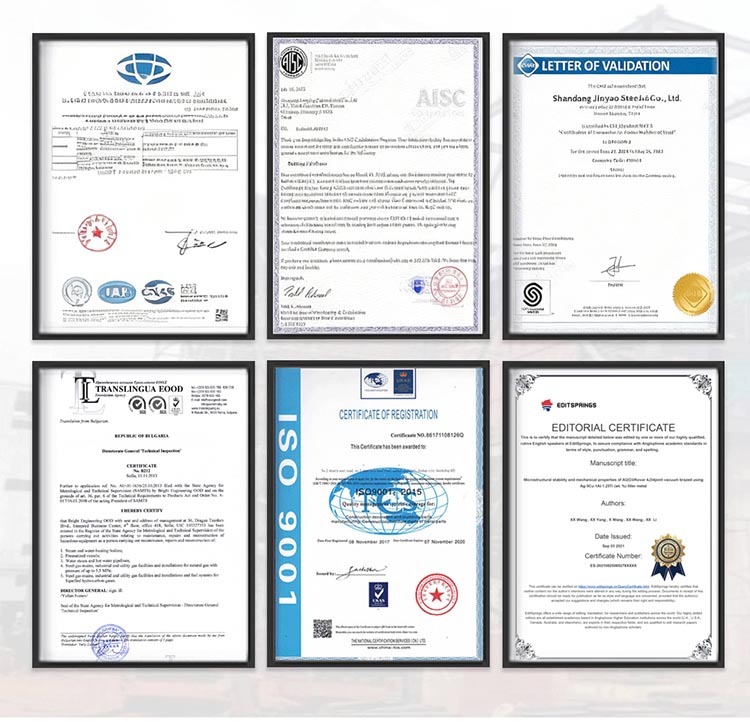
Certifications
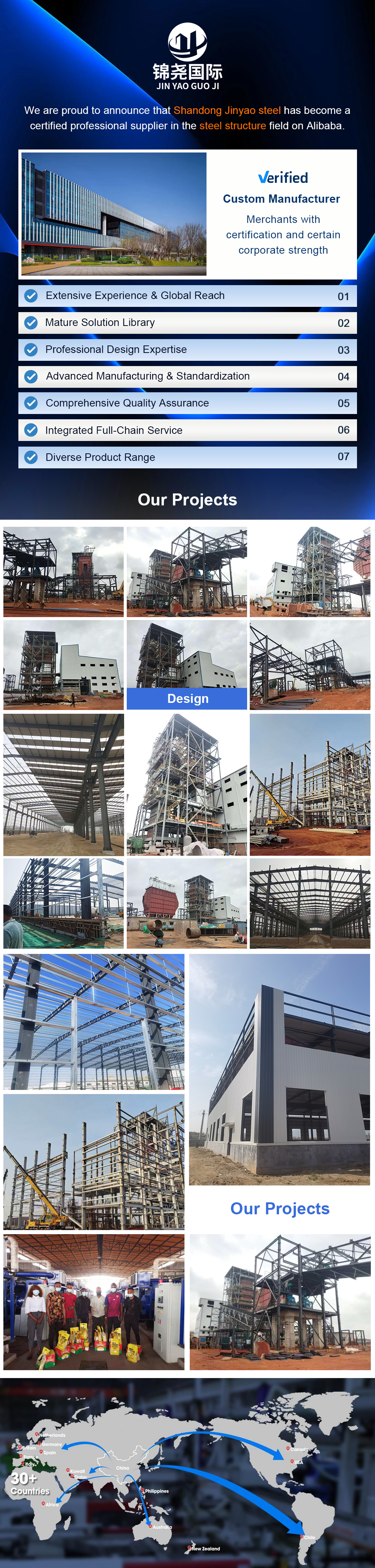
Customer Photos
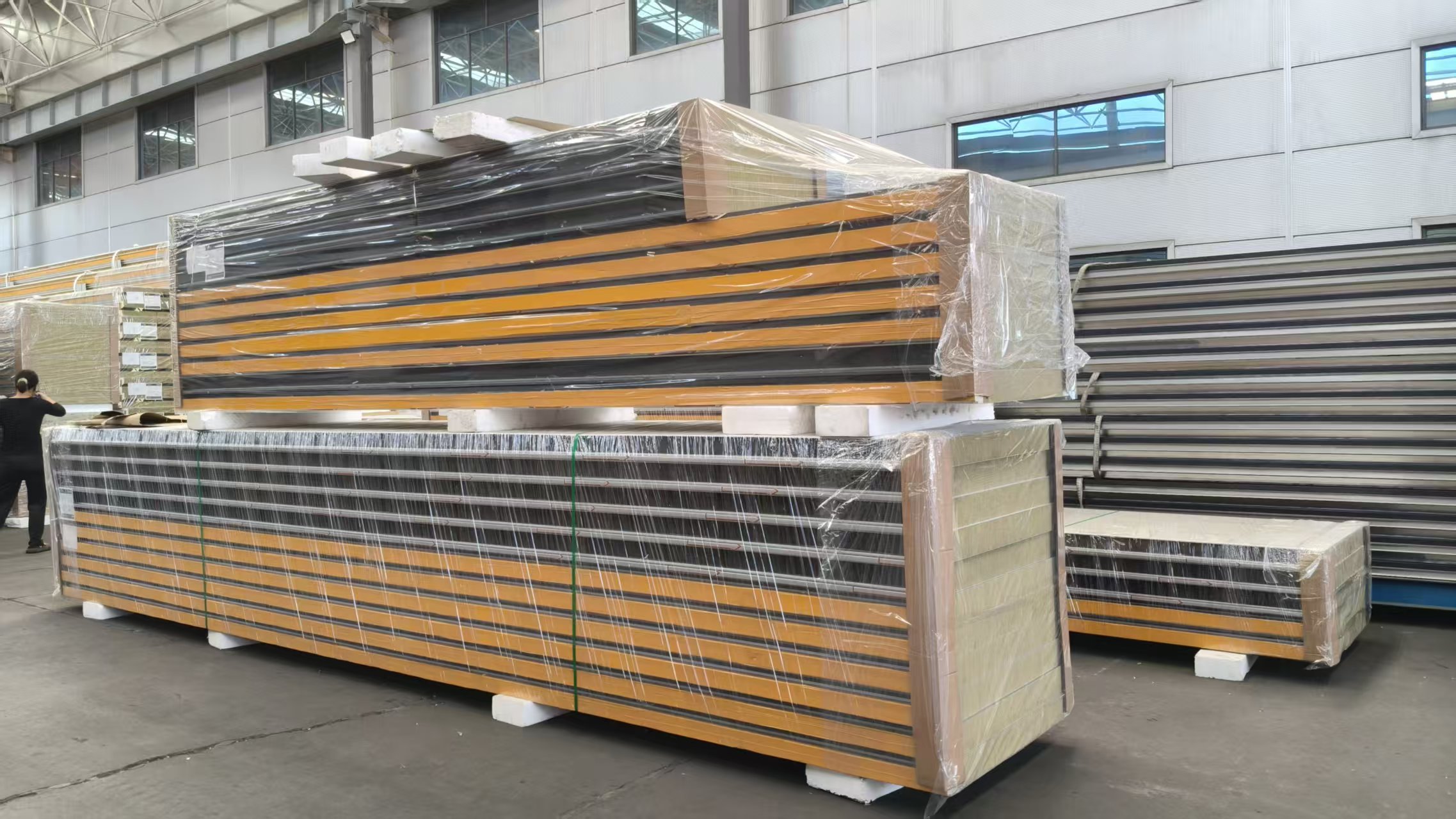
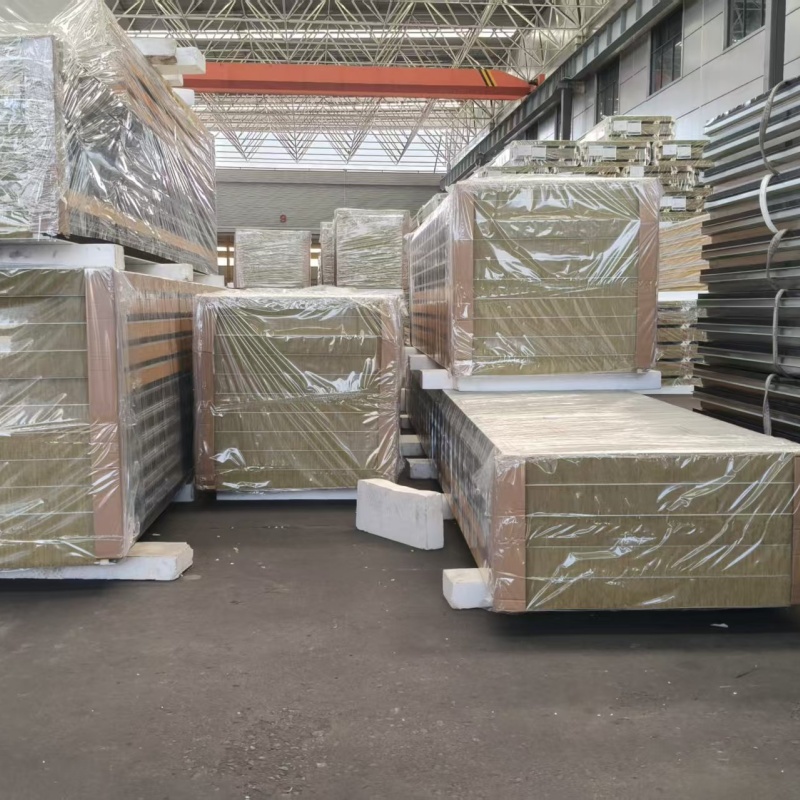
Packing & Delivery
Frequently Asked Questions
Q1: Why choose us?
We are a factory direct supplier, offering highly competitive quality and prices, along with excellent services.
Q2: How can we guarantee quality?
We always provide a pre-production sample before starting mass production, and a final inspection is always carried out before shipment.
Q3: What can you buy from us?
We supply seamless pipes, color-coated sheets, galvanized sheets, sandwich panels, and H-beams.
Q4: Do you provide customized parts?
Yes, we accept customer drawings and manufacture products accordingly to meet custom specifications.
Q5: Are free samples available?
Yes, our regular-sized samples are provided for free; however, buyers are responsible for the shipping costs.
Q6: What is the thermal conductivity and density of your PU/PIR core?
The thermal conductivity of our PU/PIR sandwich panels is ≤0.0195w/(m. k), with a core material density range of 40-45 KG/M3.
 Jonas Build