Fully compliant with EU building envelope guidelines, fire classifications, and RE2020 insulation standards.
The French building sector is undergoing a profound structural evolution driven by the Réglementation Environnementale 2020 (RE2020). Moving beyond the thermal limits of the previous RT2012 code, RE2020 dictates strict thresholds on LCA (Life Cycle Assessments), embodied carbon index, and operational energy efficiency. For industrial logistics hubs, commercial warehouses, and manufacturing plants across France—ranging from the logistics corridors of Île-de-France and Hauts-de-France to the aerospace and biotech hubs in Occitanie and Auvergne-Rhône-Alpes—energy efficiency is no longer optional. It is a critical compliance metric.
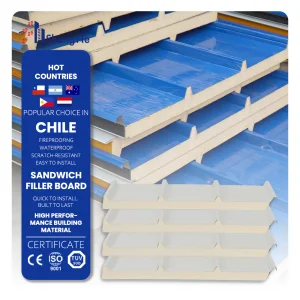
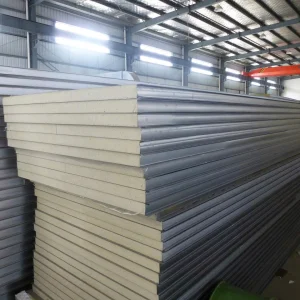
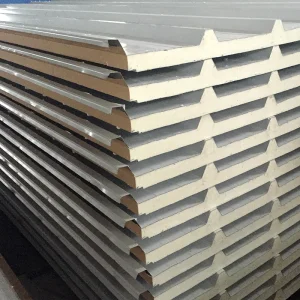
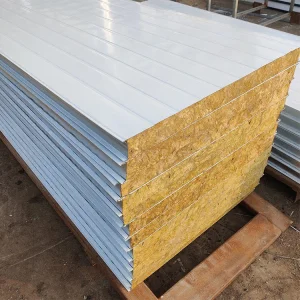
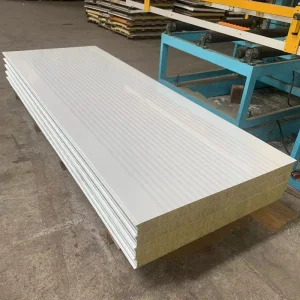
Insulated sandwich panels (also known as panneaux sandwich isothermes) are at the forefront of this compliance pathway. Modern PIR (Polyisocyanurate) and mineral wool (laine de roche) core composite panels deliver exceptional thermal resistance ($U$-values as low as $0.11 \text{ W/m}^2\text{K}$ for 200mm configurations). This high thermal capacity dramatically reduces the mechanical HVAC loads of large-volume buildings. Furthermore, with the aggressive decarbonization of the European grid, these panels minimize both operational energy consumption and the overall environmental impact over the building life cycle.
For industrial envelopes to withstand the climatic challenges of the Atlantic coast, the intense alpine winters, and Mediterranean moisture profiles, designers must specify exact performance classes:
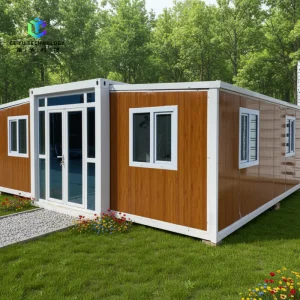
Flexible modular, HVAC ducting, and cold room building blocks engineered for fast global assembly.
Selecting the appropriate core material depends directly on the mechanical, acoustic, and thermic demands of the project. The table below details standard core properties used across French commercial developments:
| Insulating Core Material | Thermal Conductivity ($\lambda$) | Euroclass Fire Rating | Recommended Applications | Moisture Resistance |
|---|---|---|---|---|
| Polyurethane (PUR) | $0.022 - 0.024 \text{ W/m·K}$ | Class B-s2, d0 | General industrial warehousing, cold rooms | High (closed-cell structure) |
| Polyisocyanurate (PIR) | $0.020 - 0.022 \text{ W/m·K}$ | Class B-s1, d0 | Logistics centers, deep-freeze cold chains | Excellent (>95% closed-cell) |
| Mineral Rockwool | $0.038 - 0.044 \text{ W/m·K}$ | Class A2-s1, d0 / A1 | High-fire risk manufacturing, public zones | Medium (needs vapor barrier) |
| Extruded Polystyrene (XPS) | $0.029 - 0.033 \text{ W/m·K}$ | Class E / D | Foundations, under-slab cold storages | Outstanding (waterproof) |
In a volatile supply environment, material delivery timelines determine project success. Sourcing insulated sandwich panels directly from a specialized factory in China provides a reliable and cost-effective solution. Ningbo Jonas Build Co., Ltd. utilizes advanced manufacturing technologies and optimized loading patterns to deliver building systems to primary European maritime entry points, including Le Havre, Marseille-Fos, and Dunkirk.
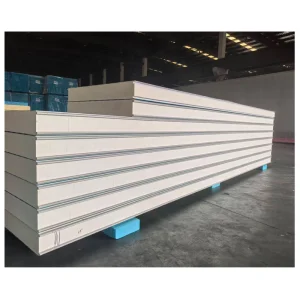
By maintaining raw material reserves (structural steel coils and high-quality chemical formulations) and employing fully automated continuous double-belt production lines, our factory mitigates lead-time uncertainties. Furthermore, container space is optimized through precision nesting of panels and customized sizing (up to 11.8m in length to fit 40ft GP containers). This reduces marine freight costs per square meter and minimizes transit risk through robust, marine-grade packaging.
Ningbo Jonas Build Co., Ltd. is a professional China industrial construction panel manufacturer specializing in insulated building panel solutions for global industrial and commercial construction projects. With extensive industry experience and advanced manufacturing capabilities, the company is committed to delivering high-quality, energy-efficient, and customized panel systems that meet the diverse requirements of customers worldwide.
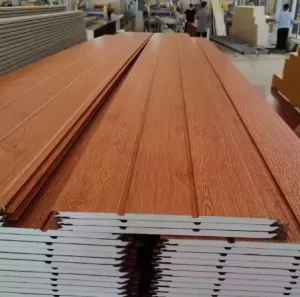
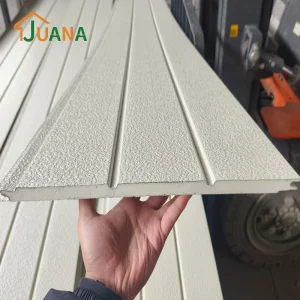
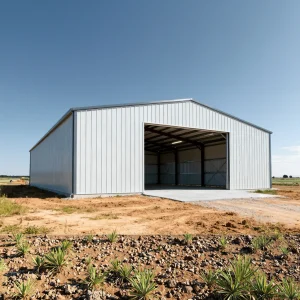
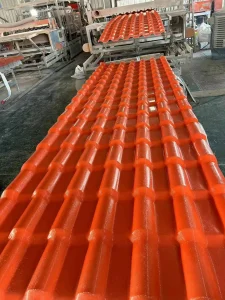
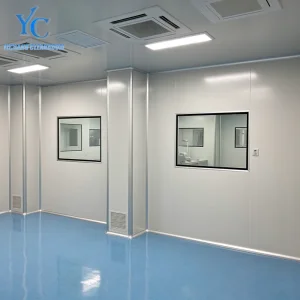
The company provides a comprehensive range of products, including insulated sandwich panels, industrial wall panels, roofing panels, cold room panels, cleanroom panels, fire-rated panels, and customized building envelope solutions. Designed for superior thermal performance, structural reliability, and rapid installation, these products are widely used in industrial plants, warehouses, logistics centers, cold storage facilities, commercial buildings, modular construction projects, and infrastructure developments.
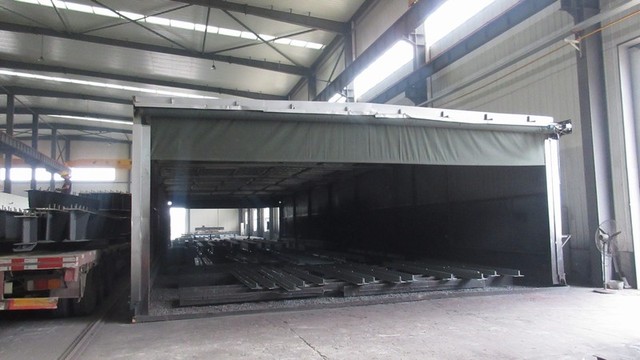
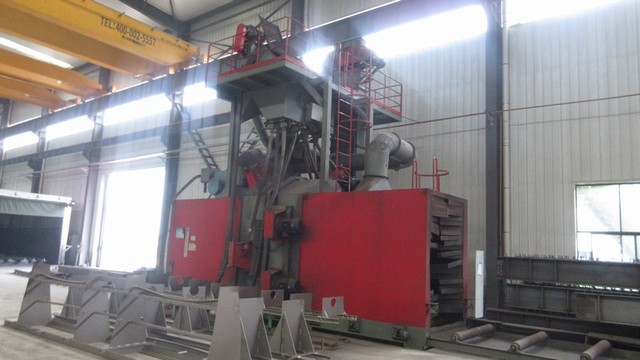
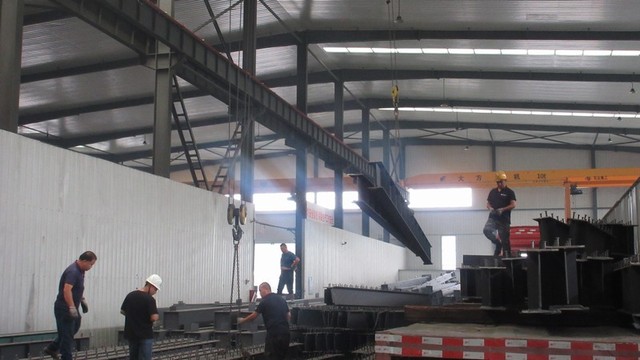
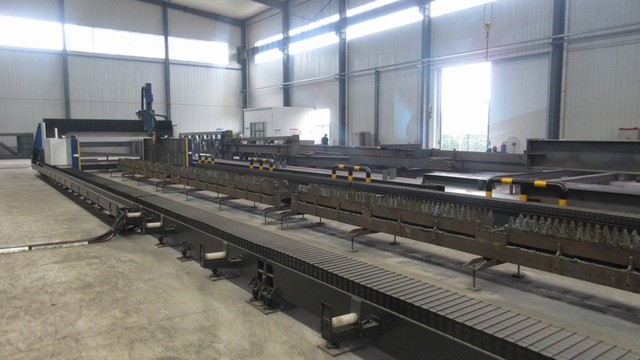
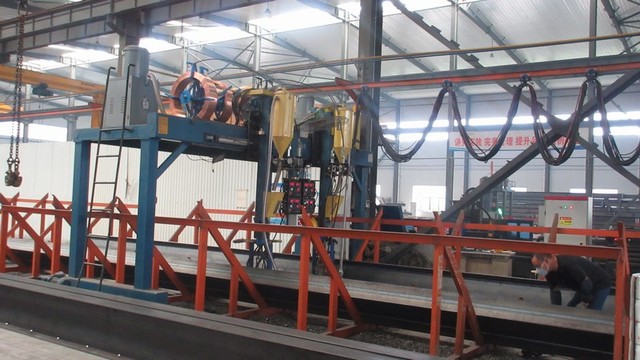
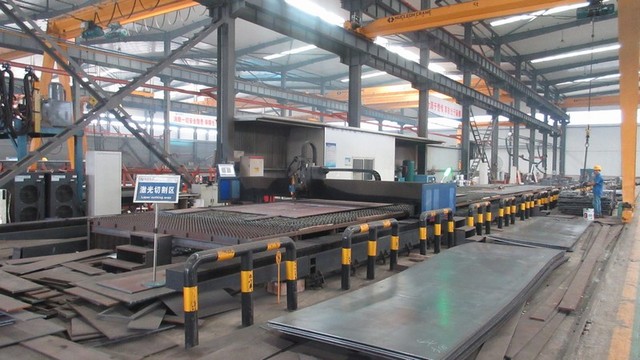
Ningbo Jonas Build Co., Ltd. operates modern production facilities equipped with advanced automated manufacturing lines, precision processing equipment, and strict quality inspection systems. Supported by a skilled team of engineers and technical specialists, the company offers one-stop services covering project consultation, product design, manufacturing, quality assurance, packaging, and international logistics coordination.
Innovation, quality, and sustainability are the core values driving the company's development. By utilizing advanced production technologies and premium raw materials, Jonas Build continuously enhances product performance in thermal insulation, fire resistance, weather protection, and energy efficiency. The company's panel systems help customers reduce construction time, lower operating costs, and improve overall building performance.
Committed to excellence and customer satisfaction, Ningbo Jonas Build Co., Ltd. has established long-term business relationships with clients across Asia, Europe, the Middle East, Africa, and the Americas. The company remains dedicated to providing reliable insulated building panel solutions that support sustainable construction and create long-term value for customers worldwide.
Explore our high-performance polyurethane (PIR/PU), mineral wool, and specialized composite roofing and wall systems.
The future of insulated panel technology centers on the integration of sustainable raw materials, improved circularity, and structural adaptability. Driven by European green building directives, the industry is transitioning toward the adoption of bio-attributed polyurethane cores and steel facings containing recycled materials. This development helps projects optimize their Life Cycle Assessments (LCAs), which are crucial for securing building permits in France.
Simultaneously, the integration of solar photovoltaics with structural roof panels is becoming a standard engineering approach. Insulated metal roof panels now incorporate specialized standing seams designed to mount PV arrays without puncturing the weather-tight skin. This configuration supports French industrial developments in meeting regulatory solar mandates for new commercial parking structures and large logistic roofs.
Achieving target performance levels requires proper installation protocols. The following steps outline key practices for structural envelope integrity:
Professional engineering answers regarding regulations, logistics, and material performance.
PIR sandwich panels comply with RE2020 requirements by providing a low thermal conductivity ($\lambda = 0.022 \text{ W/m·K}$), which helps minimize operational energy use in large buildings. Additionally, manufacturers provide Environmental Product Declarations (EPDs/FDES) to verify that the carbon footprint of the steel and foam core meets national environmental life-cycle standards.
Under the European classification system (EN 13501-1), industrial wall and roof applications typically require a minimum rating of Class B-s2, d0. For projects with strict fire safety requirements, Class B-s1, d0 PIR panels or Class A2-s1, d0 (non-combustible) Rockwool panels are recommended to limit smoke development and prevent flaming droplets.
For coastal environments within 10 km of the sea, we apply specialized protective coatings to the steel skins, such as PVDF (polyvinylidene fluoride) or polyurethane coatings. These coatings provide RC4 or RC5 class protection, preventing corrosion from salt spray and humidity.
The manufacturing lead time is typically 15 to 20 days, depending on order size. Shipping from our facilities to main French ports like Le Havre or Marseille-Fos takes approximately 30 to 35 days, resulting in a total delivery timeline of 45 to 55 days.
 Jonas Build